

Motorized Exoskeletons for Osteoarthritis: A Revolutionary Alternative to Joint Replacement
Discover how the DNSYS X1 hip exoskeleton and Z1 knee exoskeleton are offering new hope for osteoarthritis patients seeking alternatives or supplements to joint replacement surgery.
Motorized Exoskeletons for Osteoarthritis: A Revolutionary Alternative to Joint Replacement
When Your Joints Hurt But Surgery Isn't the Answer Yet
For millions of Americans living with knee or hip osteoarthritis, the daily struggle is real. Climbing stairs feels like conquering a mountain. A walk around the neighborhood leaves you exhausted. And the big question looms: when does the pain become bad enough to justify joint replacement surgery?
But what if there was another option? What if instead of replacing your joints, you could support them with wearable robotic technology that reduces pain, preserves mobility, and delays or even eliminates the need for surgery?
Enter the world of consumer-grade motorized exoskeletons—and two products from Hong Kong startup DNSYS are leading this revolution.
Understanding Osteoarthritis and the Problem It Creates
Osteoarthritis affects over 32.5 million American adults, with the knee and hip being the most commonly affected joints. The condition occurs when the protective cartilage that cushions the ends of bones wears down over time, leading to pain, stiffness, and reduced mobility.
The Impact on Daily Life:
- Knees absorb tremendous force during everyday activities—up to 300% of body weight just walking downstairs
- Hiking can put 500% of body weight pressure through your knees
- Even standing up from a chair becomes a challenge as the condition progresses
- Pain often leads to reduced activity, which accelerates muscle weakness and joint deterioration
Traditional treatment options progress through physical therapy, medications, injections, and eventually joint replacement surgery. But surgery isn't right for everyone—some patients are too young (facing multiple revisions over their lifetime), some have health conditions that increase surgical risk, and others simply aren't ready to undergo a major procedure.
This is where motorized exoskeletons offer a compelling new option.
DNSYS: The Company Behind the Revolution
DNSYS (pronounced "dee-en-sis") is a Hong Kong startup founded four years ago by robotics experts who previously worked for companies like Segway, DJI, and Xiaomi. Their mission: to create affordable, practical exoskeletons that enhance mobility for everyday people.
Unlike medical-grade exoskeletons costing $100,000 or more, DNSYS products are designed for consumer use at prices that make them accessible to most families dealing with joint pain and mobility limitations.
The DNSYS X1: Hip Exoskeleton for Reduced Strain
What It Is
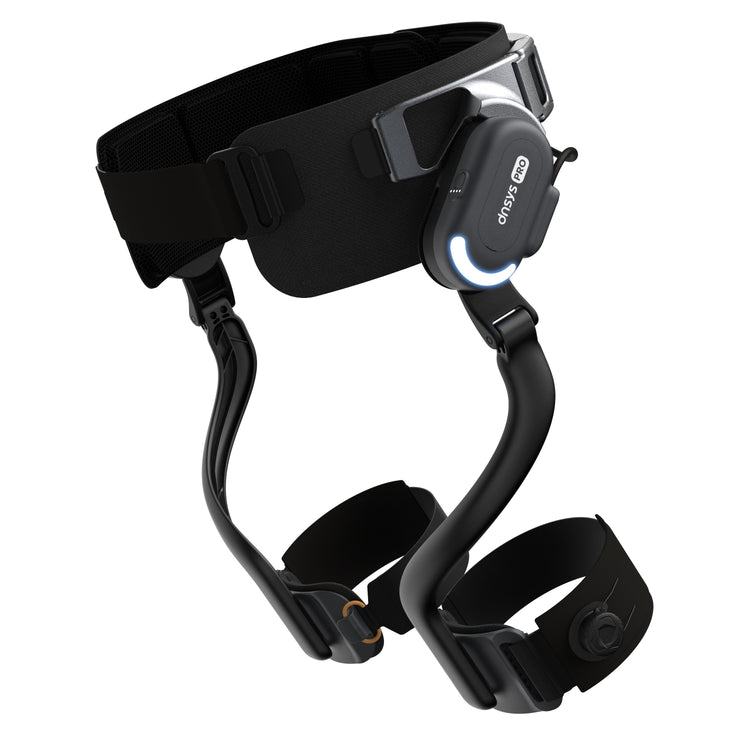
The DNSYS X1 is an AI-powered hip exoskeleton that provides motorized assistance to your hip joints during walking, hiking, and climbing. It's designed as both a fitness enhancement and a mobility aid for people with impaired movement.
How It Works
The X1 uses motors positioned at the hip joints to lift and push your legs forward at the tops and backs of your thighs. Here's the technology behind it:
AI-Powered Motion Sensing: The X1's onboard sensors identify and analyze leg positioning thousands of times per second, running that data through advanced algorithms on a dual-core 240-MHz processor. This allows the system to interpret your walking intentions and instantaneously adjust motor output to match your pace and movements.
Multiple Assistance Modes:
- ECO Mode: Light assistance for extended daily use
- SPORT Mode: Moderate power for recreational activities
- BOOST Mode: Maximum assistance delivering up to 1.2 horsepower
AQUA Mode: For rehabilitation and strengthening, this mode generates opposing force to simulate isokinetic training, which can help build muscle strength around weakened joints.
Key Specifications
| Feature | DNSYS X1 Specifications |
|---|---|
| Weight | 1.6 kg (3.5 lb)—lightest exoskeleton on the market |
| Peak Power | 900W |
| Battery Life | 7 hours (Carbon), 14 hours (Carbon Pro dual battery) |
| Size When Folded | Compact as A4 paper—fits in a backpack |
| Waist Range | 27.5 to 49 inches |
| Materials | Aerospace-grade aluminum alloy, high-strength carbon fiber |
Benefits for Osteoarthritis Patients
According to DNSYS and independent reviewers, the X1 offers significant benefits for those with joint conditions:
Reduced Physical Strain:
- 30% decrease in thigh muscle energy expenditure
- 20% reduction in average heart rate during activity
- The hip joint support system significantly reduces strain on lower limb joints
Knee Protection During Descents: The X1's AQUA mode activates during downhill movement, with motors acting as a brake to allow controlled descents while preventing excessive joint strain. One reviewer noted that descending steep hills was much less demanding on their knees compared to hiking without the device.
Real User Experience: One Tom's Guide reviewer who suffers from a form of degenerative immuno-arthritis affecting their legs noted: "I suffer from a form of degenerative immuno-arthritis, which means I often have joint and mobility problems in my legs... I can see the X1 being of genuine assistance to me and those with similar issues."
Another user shared: "After long covid, I have been struggling with hip pain for quite awhile. Recently received my DNSYS exoskeleton, I tried a few jogging sessions with it. Really helpful!"
Pricing
- X1 Lite: $799
- X1 Carbon: $999
- X1 Carbon Pro: $1,899 (dual batteries, titanium components)
Explore the DNSYS X1 Hip Exoskeleton
The DNSYS Z1: Knee Exoskeleton for Direct Joint Support

What It Is
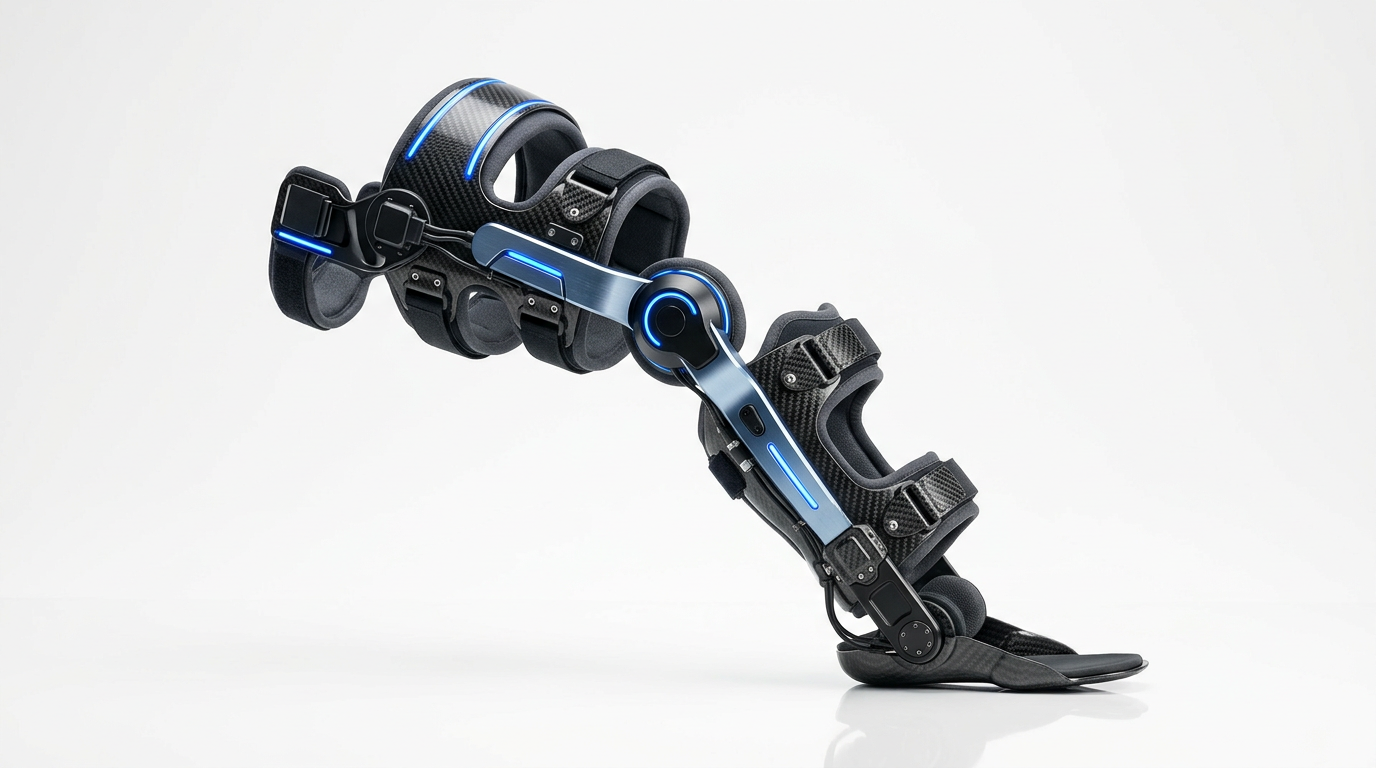
The DNSYS Z1 is marketed as the world's first knee exoskeleton built specifically for power and protection. Unlike the X1 which assists at the hip, the Z1 delivers motorized support directly to the knee joint—exactly where osteoarthritis patients need it most.
How It Works
The Z1 uses motors located at the knee joint along with a unique transmission design to deliver force to both the thigh and calf. The system consists of two hinged exoskeleton units (one for each leg) that can be mounted in just 15 seconds.
Intelligent Power Delivery: The 450-watt motor in each unit delivers force to the backs of the calf and thigh via padded supports, simultaneously lifting the thigh up and forward while pushing off against the calf.
Real-Time Adaptation: Like the X1, the Z1 monitors your movements and adjusts assistance based on what you're doing—whether climbing stairs, walking on flat ground, or navigating slopes.
Key Specifications
| Feature | DNSYS Z1 Specifications |
|---|---|
| Motor Power | Up to 900W (combined dual-motor system) |
| Weight per Unit | 1.5 lb (680g) each |
| Setup Time | 15 seconds |
| Strength Boost | Up to 50% increase in calf and thigh strength |
| Pressure Reduction | Up to 200% reduction in knee pressure |
| Lifting Force | Equivalent to 20 kg (44 lb) sustained support |
| Weather Protection | IP54 rated, cold resistant to -20°C |
| Battery Life | 3-8 hours depending on model |
How the Z1 Addresses Osteoarthritis
The Knee Pressure Problem: Your knees absorb incredible forces during daily activities:
- Walking downstairs: 300% of body weight
- Hiking: 500% of body weight
- Skiing: Up to 700% of body weight
For someone with osteoarthritis, this repetitive impact accelerates cartilage breakdown and intensifies pain. The Z1 addresses this directly.
What the Z1 Provides:
Pressure Reduction: The Z1 can reduce impact forces by up to 200% of your body weight, significantly cushioning your knees during high-stress activities like climbing stairs or walking on slopes.
Active Support: The device provides sustained lifting force equivalent to 20 kg (44 lb), making movements like standing up from a chair dramatically easier. It can also offset the pressure of carrying a 35 kg (77 lb) backpack on the knees.
Strain Redistribution: The assistive torque and strain redistribution help take load off the damaged knee joint and distribute it across the exoskeleton's frame.
Protection During Activity: With nine integrated safety modules and IP54 weather protection, the Z1 is designed for unpredictable outdoor conditions—rain, cold, or rough terrain.
Why This Matters for Joint Pain Sufferers
According to DNSYS, one of the biggest benefits of the Z1 is how much strain it takes off your joints. Joint damage from osteoarthritis can create a vicious cycle: pain leads to reduced activity, which leads to muscle weakness, which puts more stress on already-damaged joints.
An assistive exoskeleton breaks this cycle by:
- Reducing joint impact during activity
- Preventing repetitive motion injuries
- Allowing people to stay active longer
- Serving as a daily mobility aid for those with chronic limitations
Pricing
- Z1 Single Joint (225W motor): $699 (retail $1,099)
- Z1 Dual Joint (Aluminum/Carbon Fiber): $899 (retail $1,499)
- Z1 Dual Joint Pro (Titanium): $1,398 (retail $2,298)
Explore the DNSYS Z1 Knee Exoskeleton
Combining Both: Full-Leg Support
For patients with both hip and knee osteoarthritis—a common combination—DNSYS designed the X1 and Z1 to be fully compatible and work together. Using both systems creates a comprehensive leg support solution from hip to calf.
This combined approach offers:
- Complete lower extremity assistance
- Coordinated motor support across multiple joints
- Potential to delay multi-joint replacement surgery
- Greater activity capability than either device alone
Exoskeletons vs. Joint Replacement: Understanding Your Options
When Exoskeletons Might Be the Right Choice
Before You're Ready for Surgery:
- Early to moderate osteoarthritis where surgery isn't yet recommended
- Younger patients (under 60) who want to delay surgery and potential future revisions
- Patients wanting to "buy time" while waiting for improved surgical techniques or implants
Instead of Surgery:
- Patients with health conditions that increase surgical risk
- Those who prefer to avoid surgery altogether
- Active individuals who can maintain joint function with external support
- People managing their condition through conservative treatment
After Surgery:
- Post-surgical rehabilitation and strength building
- Support for an unoperated joint when one side has been replaced
- Long-term activity enhancement to protect surgical outcomes
When Joint Replacement Is Still the Best Option
Exoskeletons are not a replacement for surgery in all cases. Joint replacement remains the gold standard for:
- Severe arthritis with bone-on-bone contact
- Significant joint deformity
- Patients whose quality of life is severely impacted despite conservative treatment
- Cases where conservative options have been exhausted
The key is working with your orthopedic surgeon to determine the right approach for your specific situation.
Important Considerations Before Purchasing
What Exoskeletons Cannot Do
It's important to set realistic expectations:
- They cannot reverse arthritis or regenerate cartilage
- They require some baseline mobility to use effectively
- They don't help with balance issues (the X1 specifically notes this limitation)
- They require battery charging and maintenance
- They add equipment to your body during activities
Practical Limitations
Based on user reviews and manufacturer information:
- The X1 may not provide noticeable benefit on flat ground for all users
- Learning to use the devices effectively takes time
- The companion app is essential for optimal mode selection
- Not yet optimized for all activities (such as cycling)
Physical Requirements
The Z1 is suitable for individuals with:
- Height above 150 cm (59 inches)
- Body weight above 40 kg (88 lbs)
Cost Considerations
While significantly more affordable than medical-grade exoskeletons ($100,000+), DNSYS products represent a meaningful investment:
- Entry-level options start around $699-$799
- Premium versions range from $1,398-$1,899
- May require purchasing both X1 and Z1 for comprehensive support
- Not currently covered by Medicare or most insurance plans
However, compared to joint replacement surgery costs (typically $30,000-$50,000 before insurance) and the associated recovery time, exoskeletons offer a different value proposition for the right patients.
The Future of Joint Support Technology
The DNSYS X1 and Z1 represent an emerging category of consumer assistive technology that bridges the gap between traditional mobility aids (canes, walkers, braces) and major surgical intervention.
As this technology evolves, we can expect:
- Improved AI that better anticipates user movements
- Lighter, more comfortable designs
- Extended battery life
- More specialized options for different conditions
- Potential integration with physical therapy programs
- Eventually, possible recognition by insurance providers
Taking the Next Step
If you're living with knee or hip osteoarthritis and wondering whether exoskeleton technology might help you:
Talk to your orthopedic surgeon about where you are in your treatment progression and whether assistive devices make sense for your situation
Assess your goals - Are you trying to delay surgery? Stay active longer? Return to activities you've given up?
Consider a trial - If possible, try before you buy to ensure the technology works for your specific needs
Research thoroughly - Read user reviews, watch demonstration videos, and understand both the benefits and limitations
Ready to explore DNSYS exoskeletons? Visit DNSYS to learn more about the X1 and Z1
This article is for informational purposes only and should not be considered medical advice. Always consult with qualified healthcare professionals before making decisions about your osteoarthritis treatment. OrthoProcedures may receive a commission from purchases made through the links in this article, which helps support our mission to provide free, transparent healthcare information.
References
[1] DNSYS Official Website. (2025). DNSYS X1 AI Exoskeleton: Walk Farther, Faster, with Less Effort. Retrieved from https://dnsys.ai/
[2] New Atlas. (2025). Powered knee exoskeleton boosts leg strength by a claimed 50%. Retrieved from https://newatlas.com/outdoor-gear/dnsys-z1-powered-knee-exoskeleton/
[3] Tom's Guide. (2025). Dnsys X1 Exoskeleton Review. Retrieved from https://www.tomsguide.com/ai/dnsys-x1-exoskeleton-review
[4] Yanko Design. (2025). Dnsys Z1: The $699 Knee Exoskeleton That Turns You into a Superhuman. Retrieved from https://www.yankodesign.com/2025/07/28/dnsys-z1-the-699-knee-exoskeleton-that-turns-you-into-a-superhuman/
[5] Gear Junkie. (2025). Dnsys X1 System Review: Do Exoskeleton 'E-Legs' Boost Hiking Performance? Retrieved from https://gearjunkie.com/outdoor/hiking/dnsys-x1-exoskeleton-review
[6] Kickstarter. (2025). Dnsys Z1 Knee Exoskeleton: Defy Gravity, Go Beyond. Retrieved from https://www.kickstarter.com/projects/dnsys/dnsys-z1-knee-exoskeleton-defy-gravity-go-beyond